
Siding Contractor in Peabody, KS
Your local siding contractor for Peabody and Marion County — siding installation, replacement, and repair on nineteenth-century homes, including the peeling paint and hidden clapboard rot that follow when an old wall gets insulated and stops breathing.
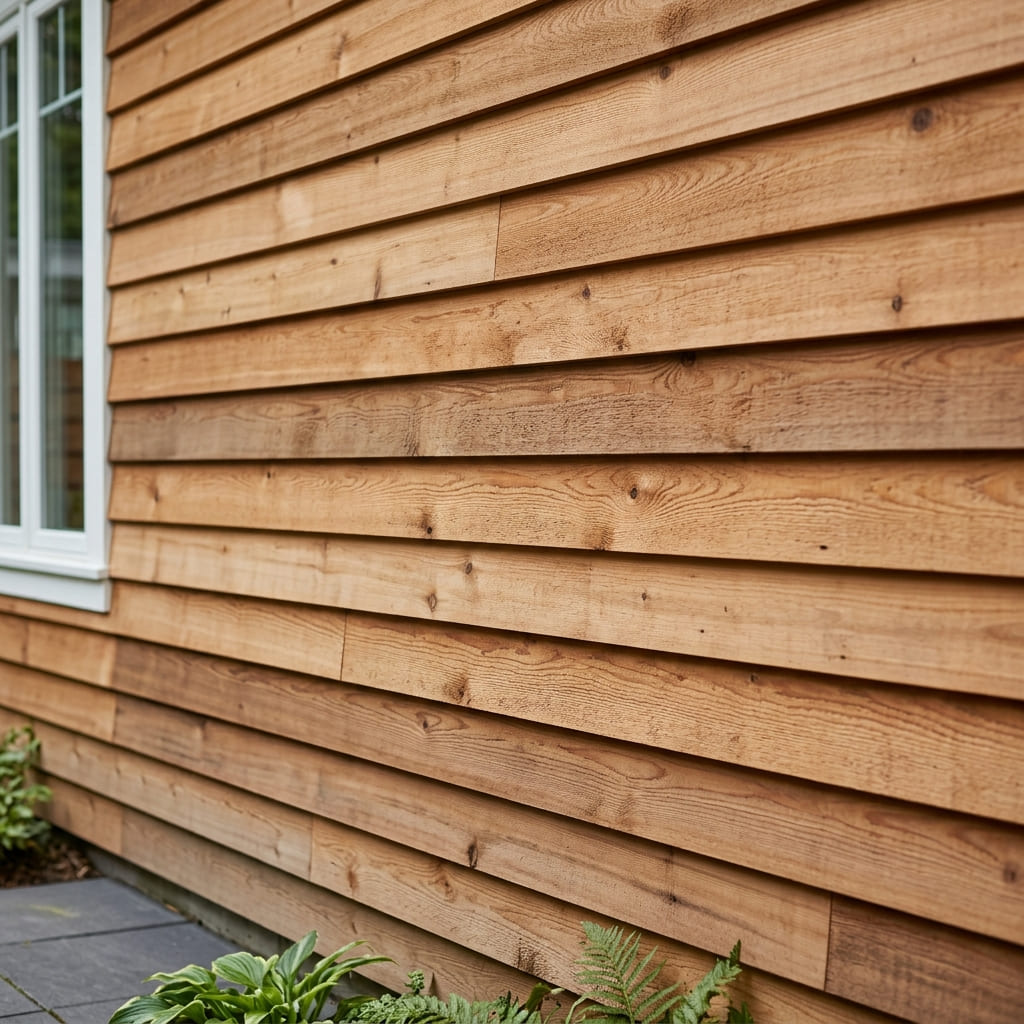
Siding Installation & Repair in Peabody, KS
Peabody is a town of 937 in southern Marion County, and it takes its history more seriously than most places its size. In May 1874 F. H. Peabody offered to fund a library building if the township would secure four lots for it; the contract was let in early 1875 and the doors opened that June. That building was the first free tax-supported library in Kansas, and it went on the National Register in 1973. The downtown around it was listed as the Peabody Downtown Historic District on May 29, 1998, and individual properties such as the W. H. Morgan House and the J. S. Schroeder Building carry listings of their own.
All of which means Peabody has something few small Kansas towns still have: a large stock of genuine nineteenth-century houses, standing, occupied, and mostly still wearing their original wood. That is a good problem and an unusual one, and it is why the siding work here looks nothing like the work five miles down the road. Siding Pros KS spends most of its time in Peabody dealing with one specific and badly misunderstood failure — a wall that was built to breathe and was later sealed shut with the best of intentions.
Start with how these houses were built. A wall from the 1870s or 1880s is typically clapboard nailed to studs, sometimes over board sheathing, with no housewrap, no insulation, and no vapor retarder of any kind. By modern standards that is a terrible wall, and in energy terms it is. But it has one quality modern walls have to work hard to achieve: it dries. Balloon framing runs continuous stud bays from the sill plate all the way to the attic, so every cavity in the house was effectively an open flue. Air moved through it constantly. Any moisture that got into the assembly — from rain, from the ground, from the kitchen — was carried away before it could do harm. That is the real reason these houses are still here.
Then, somewhere between the 1950s and the 1980s, somebody insulated it. A crew drilled a row of holes through the siding into each bay, blew in cellulose or loose fiberglass, and plugged the holes. Look at your own walls and you will very likely find the plugs: a regular line of two-inch discs showing faintly through the paint. It was sensible work at the time, and it did cut the heating bill. It also filled the chimney.
Here is what happens next, and it happens every Kansas winter. The insulation stops the airflow, so the cavity no longer dries. Nothing was added to stop indoor air getting into the wall, because these houses have no air barrier — warm, humid air from your kitchen, your bathroom, and your own breathing still leaks in through gaps at outlets, baseboards, and the tops of the walls. It reaches the back face of the clapboard, which in January is only a few degrees above the outdoor temperature. Water vapour hitting a cold surface condenses. So it condenses, on the inside face of your siding, and it runs down.
What you see from the street is paint failure. Blistering, flaking, and peeling that comes back within a season or two of a careful scrape and repaint. Homeowners assume they got bad paint or bad prep, so they do it again more carefully, and it fails again. The pattern is the giveaway: back-side moisture failure shows up in patches that follow the stud bays rather than the studs, tends to be worse on the north side and above wet rooms, and returns fast. Sun-and-age failure is more even, worst on the south and west, and stays fixed once you fix it properly.
Left alone long enough, the paint is the least of it. Boards that stay wet on the back face rot from the back face, so a wall can look tired but serviceable from the sidewalk and be genuinely soft when you take a board off. The sheathing goes next, then the bottoms of the studs and the sill. On a balloon-framed house that damage travels, because the bays are continuous. We have opened walls in Marion County towns where the visible symptom was two square feet of flaking paint and the actual condition ran eight feet down the bay.
The fix is a sequence, and the order matters more than the products. First, cut the moisture at the source: bathroom and kitchen exhaust fans that actually vent outside rather than into the attic, a clothes dryer vented outdoors, and a ground vapour barrier over bare dirt in the crawlspace or cellar. Those three items solve a surprising number of Peabody paint problems on their own and none of them involve siding. Second, air-seal from the inside where you reasonably can. Third — and only then — deal with the wall itself.
When it comes to the wall, the detail that matters most is a rain screen. That means furring the siding out over the water-resistive barrier so there is a vented air gap behind the boards, open at the bottom and breathing at the top, and back-priming every board on all six sides before it goes up. That gap gives the assembly back the drying path the blown insulation took away. It is not expensive relative to the rest of the job and it is the difference between a paint job that lasts fifteen years and one that fails in three.
On material, we will give you the honest version rather than the easy sell. If the original clapboard is sound — and old-growth lumber frequently is, under all that paint — repair and repaint is usually the right answer on a house like this, and it is the smaller invoice. If the boards are genuinely gone, wood siding in a matching profile keeps the character, and James Hardie fiber cement can be specified in period-appropriate reveals if you want to stop painting every decade. Vinyl is the cheapest route and we install it, but on an 1880s house it buries the trim that makes the house worth something and it hides the moisture instead of fixing it — you should hear that before you buy it, not after. Our materials comparison sets the options out plainly.
Siding Pros KS handles siding installation, siding replacement, and siding repair across Peabody and Marion County, and we are in Marion, Hillsboro, and Newton regularly. Read the signs you need new siding and the maintenance tips, then call for a free estimate. On a house this old we will open a test area, take readings, and show you photographs before we quote a number.
Popular siding services in Peabody
Why Peabody, KS Homeowners Choose a Local Siding Crew
Local, not storm-chasers
We work Peabody year-round, not just the few weeks after a storm rolls through. When the wall needs attention down the road, the same number still reaches us.
Fast storm response
After hail or high winds hit Marion County, exposed walls can't wait. We prioritize Peabody storm damage to keep water out of your home.
Insurance claim help
We document Peabody storm damage with photos and detailed estimates and meet your adjuster on site so nothing gets missed.
Good to know before you call.
My paint keeps peeling no matter how carefully I prep. Why?
Because on most old Peabody houses the paint is not failing from the front, it is being pushed off from behind. Paint is a vapor-permeable skin, not a dam. If moisture is condensing inside the wall cavity and collecting on the back face of the clapboard, it works its way out through the board and lifts the paint film off the wood as it goes. Nothing you do on the outside changes that. The tell is the pattern: front-side failure from sun and age is fairly even across an elevation and worst on the south and west, while back-side moisture failure tends to show up in patches, concentrates in the stud bays rather than over the studs, is often worst on the north wall or above a bathroom or kitchen, and comes back within a season or two of a genuinely good prep and repaint. If you have repainted twice and it failed twice, stop buying paint and start looking at where the water is coming from.
What are the round plugs in my siding?
Retrofit insulation. Somewhere between the 1950s and the 1980s a crew drilled a line of holes through the siding into each stud bay, blew the cavity full of cellulose or fiberglass, and plugged the holes with wooden or plastic caps. You can usually spot them as a regular row of circles about two inches across, running at one or two heights around the house, often showing through the paint as faint discs. It was done with the best intentions and it did cut heating bills. What it also did was fill a cavity that had previously been an open, ventilated chimney of air running from the sill to the attic, because that is how balloon framing was built. That cavity used to dry the back of your siding. Now it does not.
Should I put vinyl on an 1880s house?
We will install it if that is what you want, and we will be straight with you first. On a genuine nineteenth-century house, covering original clapboard with vinyl does three things. It hides the moisture problem instead of solving it, so the rot behind carries on unwitnessed. It usually means cutting back or burying the original trim, corner boards, window casings, and brackets, which is exactly the detail that gives these houses their value. And on a property that is listed on the National Register or that you might want to use rehabilitation tax credits on, it can affect eligibility. If the boards are sound and the real issue is moisture in the wall, the better job is almost always to fix the moisture, repair the damaged boards, back-prime, and repaint. If the boards are genuinely gone, we will say so and price the replacement.
What is a rain screen and why does it matter on an old house?
A rain screen is a deliberate air gap between the back of the siding and the wall behind it, usually created by running vertical furring strips over the water-resistive barrier and fastening the siding to the furring instead of straight to the sheathing. It is open at the bottom and vented at the top, so any water that gets behind the cladding drains out and any moisture that reaches the back of the boards can dry to the air. On a modern house it is good practice. On an insulated old house it is close to essential, because it restores the drying path that blowing insulation into the cavity took away. If you are re-siding a nineteenth-century Peabody house, this single detail matters more than the brand of siding you pick.
My house is near the downtown historic district. Do I need approval?
The Peabody Downtown Historic District, listed on the National Register on May 29, 1998, covers the commercial core, so most houses in town are not inside it — although several individual Peabody properties, including the W. H. Morgan House and the 1875 library building, carry their own National Register listings. Being on the National Register does not by itself stop you doing what you like with your own house. Where it starts to matter is if you want to use state or federal rehabilitation tax credits, or if a project involves public funding, because then the work has to meet preservation standards. If you think your property is listed, the Kansas State Historic Preservation Office is the right first call and it costs nothing to ask. We would rather you make that call before ordering material than after.
Is the original clapboard actually worth saving?
Often, yes, and more often than people expect. The lumber on a house from the 1870s and 1880s is old-growth, tight-ringed, and dimensionally more stable than anything you can buy today, and it is frequently sound under a hundred and forty years of paint. What kills it is not age, it is being kept wet. That is why Siding Pros KS opens a test area and takes moisture readings before quoting anything on a house this old — we want to know whether we are looking at a wall that needs replacing or a wall that needs drying out and a hundred board feet of selective repair. Those two estimates are very different numbers, and you deserve to see both before you decide.
Peabody siding project on your list? Let's handle it.
Free written estimates, honest timelines, and siding detailed for Kansas weather.