
Siding Contractor in Leavenworth, KS
Siding installation, replacement and repair across Leavenworth and Leavenworth County — including the original clapboard on the city's older housing and work inside the designated historic districts.
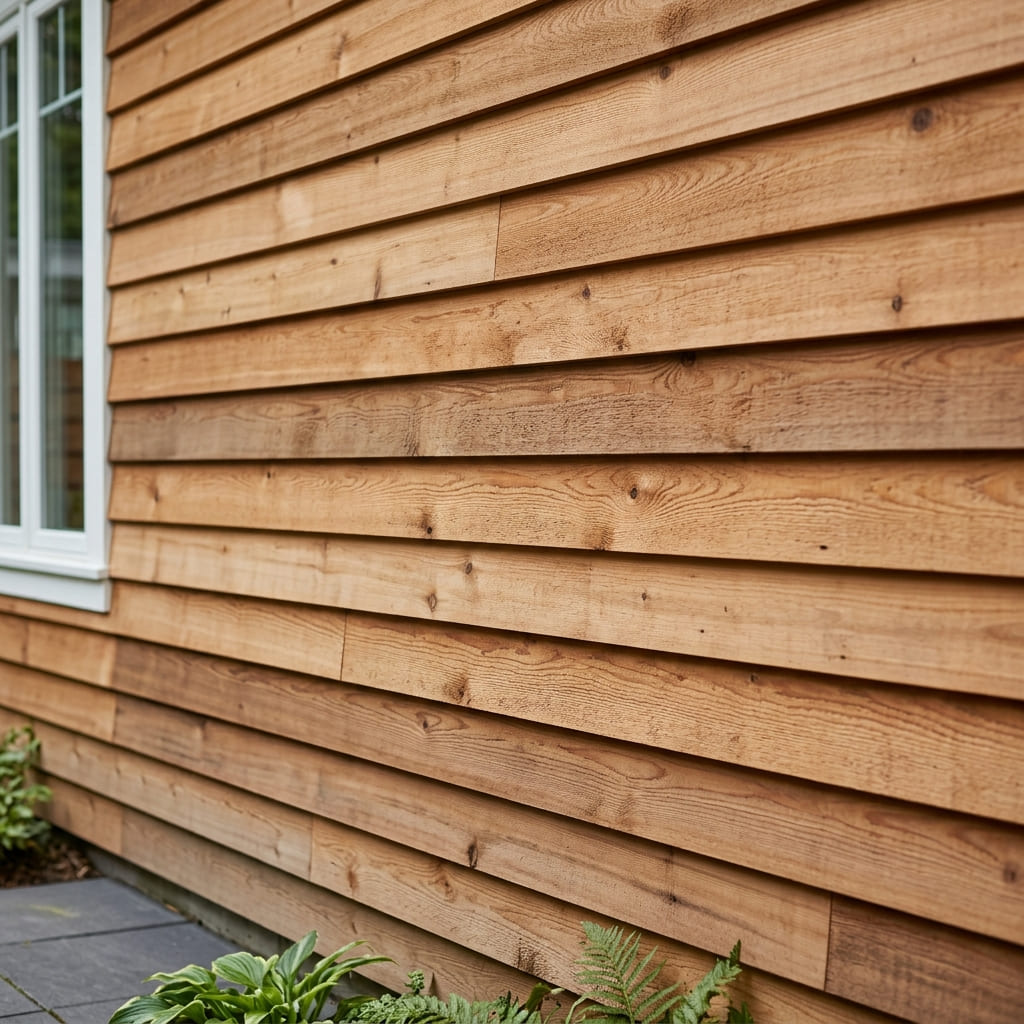
Siding Installation & Repair in Leavenworth, KS
Leavenworth was founded in 1854, incorporated the following year as the first city in the territory of Kansas, and still calls itself the First City. That head start is why a town of 37,351 people carries a housing stock most cities three times its size cannot match. The practical consequence for anyone re-siding here is that Leavenworth has something most Kansas towns do not: a review process that can say no.
That is worth knowing before you sign anything. The order of operations in this city is not quote, then contract, then permit. On a designated property it is designation check, then approval, then quote — and homeowners who do it the other way around end up with a signed contract for a material they are not allowed to install.
Why a Certificate of Appropriateness comes before a siding quote
A Certificate of Appropriateness comes before the quote because exterior alterations to designated property in Leavenworth are reviewed rather than simply permitted. The Leavenworth Preservation Commission exists to inventory, record, protect and enhance places within the city with architectural, archaeological, cultural or historical significance, and changes to a property that is listed on the National or State Register, sits inside a registered historic district, or carries local landmark status go through that commission. The review is split into minor certificates for smaller projects within the districts and major certificates for more substantial exterior alterations.
Leavenworth has more than one district in play, including the South Esplanade Historic District and the Leavenworth Downtown Historic District. The first question about any house here is therefore not what material you want — it is which of those three categories, if any, your address falls into. The city’s community development department will tell you on the phone.
The application that gets refused most predictably is the one people most want to make: wrap the original clapboard in vinyl and stop painting it. Review standards treat original cladding as a character-defining feature of a historic building, and covering it in a substitute material changes exactly what the designation protects. It also hides the wood rather than repairing it, which is a preservation objection and a building-science objection at the same time. Bring the commission the problem you are trying to solve instead of the solution you have already bought, and the conversation goes considerably better.
What state law covers, and one thing it no longer does
State law covers listed properties through the Kansas Preservation Act, which requires that the State Historic Preservation Officer be given notice and an opportunity to investigate and comment on projects that would damage or destroy property on the national or state register. Exterior and interior work, repairs, alterations, additions and partial or total demolition all fall within the scope of what that review considers. If the officer does not initiate an investigation within thirty days of receiving notice, the statute treats the project as approved.
The thing it no longer does is review your neighbours. The act formerly extended to projects within the environs of a listed property, which is the origin of the radius figure that still circulates on job sites around here. That environs review was eliminated by statute effective 1 July 2013. If someone tells you your siding needs state review because a house down the street is listed, they are working from a rule that was repealed over a decade ago.
There is a carrot alongside the stick. Kansas operates historic rehabilitation tax credits for qualifying work on listed properties, and Leavenworth publishes guidance on them, so a rehabilitation that would have been marginal on cost alone sometimes pencils out once credits are accounted for. It is worth investigating before you decide repair is unaffordable, because the calculation people do in their heads usually leaves the credits out.
What actually fails on a Leavenworth Victorian
What actually fails on these houses is rarely the wall. It is the paint film, the bottom few courses, the water table, the porch, and the trim around openings — the places where water is concentrated and where end grain is exposed. The field of the wall, six feet off the ground on an elevation that drains properly, is frequently in better condition than a homeowner assumes from the look of the paint.
That matters because the clapboard on an 1880s house is old-growth timber. Tight growth rings, high proportion of heartwood, far more natural decay resistance than anything you can buy at a yard today. Tearing it off and replacing it with modern softwood is a downgrade in material quality that happens to also cost more. Recognising which is which is most of the diagnostic work on a house in this city.
The repair sequence is unglamorous and it works. First, find and fix the water source, because a board fails where water is repeatedly delivered and no cladding survives an unaddressed leak. Second, replace only the boards that are genuinely gone, milled to match the original profile rather than approximated with stock siding. Third, back-prime every new piece on all six faces before it goes up, since unprimed back faces are why replacement boards fail faster than the originals they replaced. Finally, repaint the whole elevation rather than spot-painting, so the film is continuous and the repair is not advertised. Done in that order, a repaired wall outlasts most of what would have replaced it.
And if your house is not designated
If your house is not designated, none of the review applies and the job is an ordinary one. Most of Leavenworth falls into this category — the districts are a specific part of the city, not the whole of it. You choose the material that suits the house, pull the standard building permit, and proceed.
The habit worth carrying over is the diagnosis. New cladding installed over an unresolved moisture problem fails on a 1990s ranch exactly as reliably as on an 1880s Italianate, and the fact that nobody has to approve your choice does not make the wall behind it any more forgiving.
Siding Pros KS works across Leavenworth and Leavenworth County on siding installation, replacement and repair, in wood, James Hardie fiber cement, vinyl, metal and stone veneer. The materials comparison covers how fiber cement holds a historic profile against what vinyl can and cannot do, and the maintenance guide is the one to read if you are keeping painted wood.
We also cover Lansing, Basehor, Tonganoxie and the families buying off post at Fort Leavenworth, and run down to Bonner Springs and Kansas City. Call for a free written estimate, and if your address is in a district, tell us at the start so the scope is drawn to something the commission will actually approve.
Popular siding services in Leavenworth
Why Leavenworth, KS Homeowners Choose a Local Siding Crew
Local, not storm-chasers
We work Leavenworth year-round, not just the few weeks after a storm rolls through. When the wall needs attention down the road, the same number still reaches us.
Fast storm response
After hail or high winds hit Leavenworth County, exposed walls can't wait. We prioritize Leavenworth storm damage to keep water out of your home.
Insurance claim help
We document Leavenworth storm damage with photos and detailed estimates and meet your adjuster on site so nothing gets missed.
Good to know before you call.
Do I need permission to replace siding on a Leavenworth house?
It depends entirely on whether your property is designated, and that is the first thing to establish. If the house sits in a registered historic district, is individually listed on the National or State Register, or is a local landmark, exterior alterations go through the Leavenworth Preservation Commission and require a Certificate of Appropriateness. If none of those apply — and for most houses in the city none do — a siding replacement is an ordinary job needing only the normal building permit. Call the city’s community development department with your address before you order materials. It is a five-minute question with a large consequence.
Can I put vinyl over the original wood siding on a historic Leavenworth house?
In a designated district, this is the application most likely to be refused. Review standards for historic properties generally treat original cladding as a character-defining feature, and covering it with a modern substitute material changes the appearance the designation exists to protect, while also concealing the wood rather than fixing it. Outside a district you can do as you like. Inside one, the realistic path is repair and repaint of the original clapboard, and it is worth approaching the commission early with what you want to achieve rather than after you have signed a contract for vinyl.
What is the difference between a Major and a Minor Certificate of Appropriateness?
The split is about how much of the building’s character the work touches. Minor certificates cover smaller projects within the districts and are handled as a more streamlined review, while major certificates apply to more significant exterior alterations and get the fuller commission process. Replacing a few deteriorated boards in kind sits at a very different point on that scale from re-cladding an entire elevation in a new material. Ask the city which category your project falls into before you plan a schedule around it, because the two paths do not take the same amount of time.
My neighbour’s house is on the register. Does that mean my project gets reviewed too?
Not any more, and this is a point where old advice still circulates. The Kansas Preservation Act formerly required review of projects in the environs of a listed property, which is where the commonly repeated radius around a listed building came from. That environs review was eliminated by statute effective 1 July 2013. State-level review under the act now attaches to listed properties themselves rather than to their neighbours. Your own designation status is what matters, so check that and disregard what a contractor tells you about your neighbour’s house.
Is repairing the original clapboard really cheaper than replacing it?
Over a long enough horizon it very often is, and the reason is the material itself. The clapboard on an 1880s Leavenworth house is old-growth timber with tight growth rings and high natural decay resistance, and nothing at a modern lumber yard matches it. What fails on these houses is usually the paint film and a handful of boards at the bottom, the water table and the porch, rather than the wall as a whole. Selective replacement of the failed boards, consolidation or Dutchman repairs where it makes sense, proper back-priming of anything new, and a full repaint usually costs less than a tear-off and keeps the material that has already lasted 140 years.
My house is not in a historic district. Does any of this apply?
No, and most of Leavenworth is in that position. Outside the designated districts and landmarks, your siding project is a normal one: choose the material that suits the house and the budget, pull the ordinary permit, and get on with it. The one thing worth carrying over from the historic side is the diagnostic habit. Before choosing a material, work out whether the existing wall is failing because of the cladding or because of what is going on behind it, since re-cladding over an unresolved moisture problem fails on any house regardless of its listing status.
Leavenworth siding project on your list? Let's handle it.
Free written estimates, honest timelines, and siding detailed for Kansas weather.